

In the last quarter of 2025, LEL continued to advance evidence-based strategies that strengthen public safety while reducing unnecessary incarceration. We are particularly excited to highlight progress in federal advocacy and leadership from LEL members across the country in improving crisis response, accountability, reentry, and community partnerships.
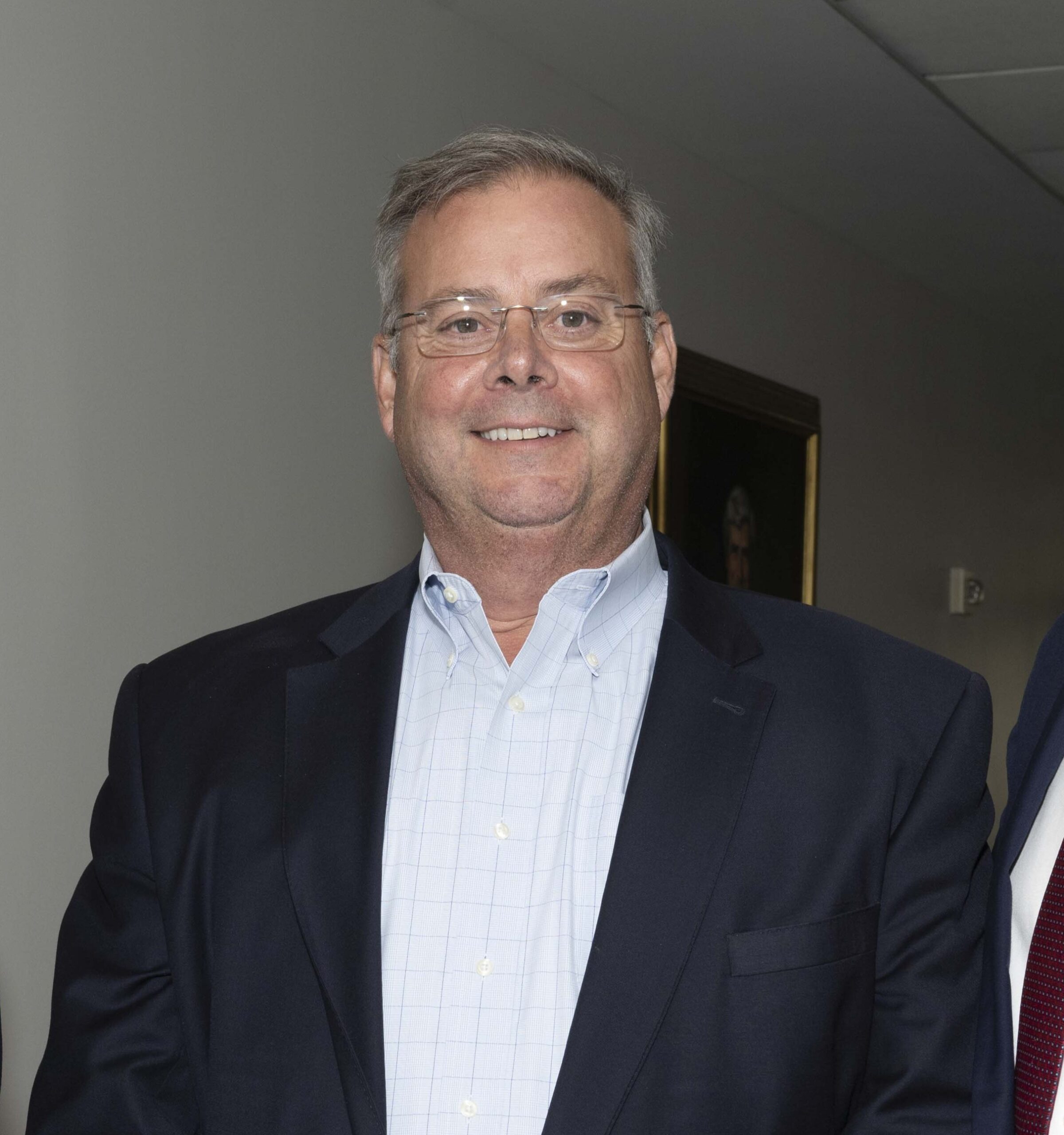
As you know, sadly, Ron Serpas will be stepping down as Advisory Board Chair at the end of this year, concluding a decade of leadership that has shaped Law Enforcement Leaders since its founding in 2015. As LEL’s co-founder and thought leader from its inception, Ron’s 30-plus years of experience in policing leadership, relentless commitment to improving the profession and the justice system overall, and consummate professionalism have left a lasting imprint on LEL and the national conversation about safety and justice.
Among his many contributions: Ron’s guidance has helped strengthen LEL’s advocacy on reentry, alternatives to arrest and incarceration, police accountability, and data-informed strategies. His leadership has ensured that LEL is a pragmatic and credible voice in our often-polarized debates about law enforcement and criminal justice. He has played a key role in expanding LEL’s public profile, sharing his time and expertise with the media and at various external events. He has also provided wise counsel at LEL’s closed-door meetings, supported LEL’s convenings and helped to build a durable network of experts whose insights guide policymakers across the country.
We are truly grateful for Ron’s leadership and for the many ways he has strengthened this coalition alongside LEL’s directors, members, and staff. Though he steps down as Chair on January 1, 2026, he will remain an active member of LEL’s Advisory Board, and we look forward to continuing to collaborate with him. Stay tuned for updates on LEL leadership in the new year.
This quarter, LEL supported various bipartisan legislative efforts to reform the justice system that have progressed even amidst a government shutdown and political stalemate.
In October, the Second Chance Reauthorization Act of 2025 (S.1843/H.R.3552) passed in the Senate as part of the National Defense Authorization Act of 2025 (S.2296) through an amendment (S.Amdt.3435 to S.Amd.3748). The bipartisan legislation would reauthorize federal reentry grant programs and strengthen services for housing, education, career training, and behavioral-health treatment. LEL joined a national support letter in May, along with hundreds of other organizations across the political spectrum, that urged Congress to advance this measure, which now awaits action in the House.
Also in October, the Safer Supervision Act (S.3077/H.R.5883), bipartisan legislation aimed at modernizing federal supervised release, was reintroduced by Sens. Mike Lee (R-UT) and Chris Coons (D-DE) and Reps. Laurel Lee (R-FL-15), Deborah Ross (D-NC-02), Mark Harris (R-NC-13), and Lucy McBath (D-GA-07). The bill seeks to reduce unnecessary reincarceration for low-level technical violations and promote evidence-based supervision practices that support reentry. The legislation was endorsed by a wide range of bipartisan organizations, including LEL, which was mentioned in Sen. Lee’s press release announcing its introduction.
In December, Sens. Dick Durbin (D-IL) and Chuck Grassley (R-IA) reintroduced three pieces of bipartisan legislation that LEL previously endorsed in 2021 and 2023. LEL’s endorsement was highlighted in the press release.
The First Step Implementation Act builds on the First Step Act and would expand access to sentencing relief while advancing reforms related to proportional sentencing and reentry. The bill would allow certain sentencing reforms to be applied retroactively and address barriers facing individuals convicted of nonviolent offenses and those sentenced for offenses committed as juveniles.
The Safer Detention Act focuses on corrections policy and would reauthorize the Elderly Home Detention Pilot Program while making technical updates to compassionate release law. The bill would extend the program through 2029 and expand eligibility for certain nonviolent individuals in federal custody.
The Prohibiting Punishment of Acquitted Conduct Act addresses federal sentencing practices and would prohibit courts from using acquitted conduct to increase a person’s sentence under the federal sentencing guidelines. The bill would limit consideration of such conduct at sentencing except when used to mitigate a sentence.
LEL members continue to advance practical approaches that strengthen safety, improve accountability, and support a fairer justice system nationwide. Some highlights include:
Improving Law Enforcement Practices
The National Policing Institute recognized Fairfax County (VA) as a model for use-of-force review, selecting it as the first “Knowledge and Innovation Site” for the National Law Enforcement Knowledge Lab. Police Chief Kevin Davis pointed to the department’s emphasis on transparency and continual learning.
New trauma-informed practices in Salt Lake County (UT) are improving responses to domestic violence. Sim Gill, the county’s District Attorney, noted that better on-scene support strengthens both survivor safety and investigative outcomes.
Forsyth County (NC) Sheriff Bobby Kimbrough highlighted a new pilot that is pairing survivor support with proactive monitoring to better address domestic violence.
A statewide award recognized Alexandria (VA) for its multidisciplinary approach to child safety. Commonwealth’s Attorney Bryan Porter and local partners were honored for coordinated work responding to child-abuse cases.
Promoting Alternative Responses
New York State’s conversation on mental-health crisis response is drawing attention to the Community Advocacy Response Team (CART) model in Albany (NY), an innovation of Police Chief Brendan Cox. Chief Cox explained how the program reduces arrests and connects residents with services, offering an example of how non-police responses can improve outcomes across the state.
Dallas County (TX) District Attorney John Creuzot helped convince county commissioners to replace lost federal funding for a county mental health support team with opioid settlement funds by underscoring the value of treatment-focused deflection to improve long-term outcomes.
Youth diversion continues to expand in Hennepin County (MN). Sheriff Dawanna Witt said broader screening allows more young people to connect with meaningful alternatives when appropriate.
Strengthening Community Partnerships
Sheriff Peter J. Koutoujian was a featured speaker at a Middlesex County (MA) community event that brought residents and experts together to discuss domestic violence prevention resources and support, commemorating Domestic Violence Awareness Month in October.
Under the leadership of Sheriff Leon Lott, the Richland County (SC) Sheriff’s Department expanded its community partnerships through civilian training programs, senior-support checks, and volunteer engagement to strengthen trust and safety. Sheriff Lott highlighted the department’s emphasis on proactive outreach to strengthen relationships with community members.
A recent donation from the Hennepin County (MN) Sheriff Foundation is helping broaden breast cancer support services. Sheriff Dawanna Witt said the partnership reflects an ongoing commitment to supporting families in the region.
Supporting Successful Reentry
North Dakota’s newly formed Interagency Council on Homelessness includes Colby Braun, Director of the Department of Corrections and Rehabilitation, as an inaugural member helping align statewide housing and reentry planning.
Alexandria (VA) hosted a community expungement clinic in October aimed at reducing barriers tied to old records. Commonwealth’s Attorney Bryan Porter partnered with advocates to expand access to these services.
Improving educational opportunities for individuals who are incarcerated is a priority for Heidi Washington, Director of Michigan’s Department of Corrections, who noted that diploma and degree programs are central to long-term reentry success. Director Washington also recently emphasized the department’s 2025 garden program, which delivered more than 116,000 pounds of produce to nonprofits around the state.
Strengthening Systems & Advancing Reform
In an interview with a local station, Brooklyn (NY) District Attorney Eric Gonzalez discussed the work of his office’s Conviction Review Unit and how ongoing case evaluations strengthen fairness and public trust.
Professor Mark Osler, a leading national scholar on clemency, called for reforming and reclaiming presidential pardon power against the backdrop of increasingly controversial pardons.
In a new impact report released by Chicago Beyond on holistic safety practices in jails and prisons, Nneka Jones Tapia, Executive Director of Justice Initiatives, speaks to the importance of this work and reflects on its early impact, drawing on her background as a correctional psychologist and corrections leader.
Correctional officer wellness is the focus of a multi-year REACH study underway in Michigan. Department of Corrections Director Heidi Washington said the research partnership aims to strengthen support systems for staff across the department.
Adopting a Systems Approach to Police Staffing, COPS Office (Oct. 2025) — A summary of a 2024 research study that outlines a six-step, evidence-based framework for police workforce planning, addressing recruitment, allocation, workload demand, and strategies for managing understaffing.
New Research on Second Look Resentencing, California Policy Lab (Oct. 2025) — An examination of outcomes for people released under five resentencing policies enacted in California between 2012-2022.
Rural Hospital Closures and Incarcerated People, Prison Policy Initiative (Oct. 2025) — A briefing on how projected rural hospital closures will affect healthcare access for the nearly one million incarcerated people housed in rural counties.
Medicaid Changes and Reentry, Health and Reentry Project (Nov. 2025) — A new analysis of how recent federal legislation will affect Medicaid continuity of care for people leaving prison and jail.
Holistic Safety Framework Impact Report, Chicago Beyond & Openfields (Nov. 2025) — Evaluation, referenced above, of correctional facilities adopting a holistic safety framework showed improvements in trust, wellness, and safety.
Wellness Works: Principles for Correctional Staff Wellness, One Voice United (Nov. 2025) — A field-informed framework outlining core components of effective correctional staff wellness programs.
We were saddened to learn of the passing of Robert B. Fiske Jr., a founding member of Law Enforcement Leaders and a former U.S. Attorney for the Southern District of New York, who had a distinguished career in law and public service. We extend our condolences to his family, colleagues, and all who worked alongside him. His obituary can be found here.
Please follow us on LEL’s new LinkedIn page.

